

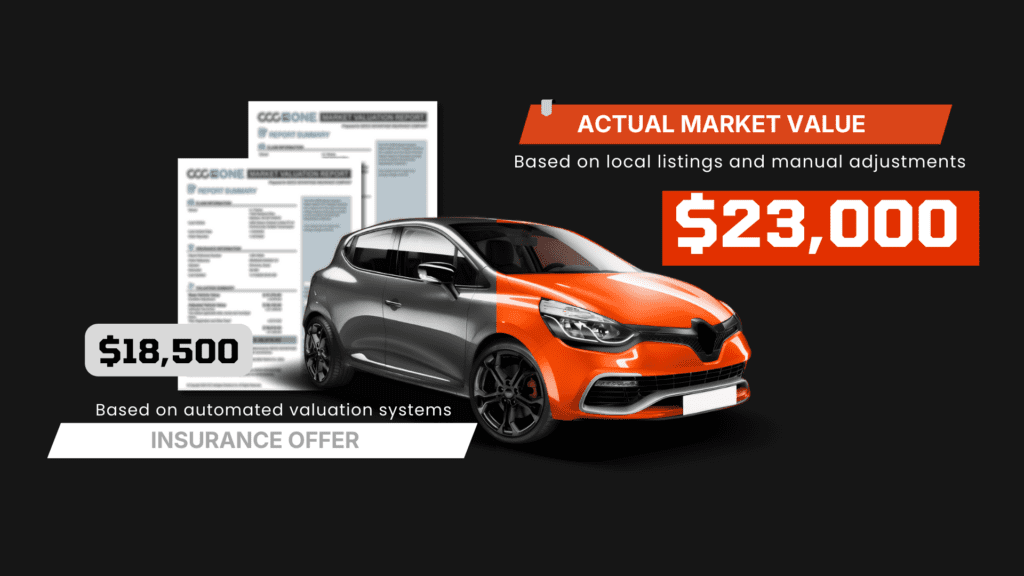
Many total loss valuations rely on automated reports.
We independently review the data — so you can understand what your car may actually be worth.
Why Total Loss Valuations Can Be Undervalued
In many cases, these valuations can miss important factors such as:
Local market pricing
Vehicle condition and mileage accuracy
Optional features and documented upgrades
As a result, the number you’re offered may not reflect what your vehicle would actually sell for
“We fix that. By rebuilding your valuation manually, line by line.”
How We Help With
Total Loss Valuations
Free Preliminary Review
We review your total loss offer to see if the valuation makes sense. No obligation.
Independent Valuation Report
We prepare a USPAP-compliant appraisal using real market data — not automated estimates.
Negotiation Support
We help you use the appraisal to seek a fair outcome with the insurer. In many cases, this step resolves the claim.
If your policy allows and a dispute remains, we assist with the appraisal clause process
Before you accept the offer it’s worth taking a second look.
Same car. Same accident. two different numbers.
recent Success
FAQs
When your car is declared a total loss, the insurer pays what it was worth right before the crash — not the repair cost. Here’s what you need to know.
WHAT IS A TOTAL LOSS CLAIM?
A total loss claim occurs when an insurance company determines that the cost to repair a vehicle exceeds its current market value. We help you navigate this process.
What does it mean when my car is “totaled”?
When your car is totaled, it means fixing it would cost more than what the car is actually worth. So instead of paying for repairs, your insurance company just pays you for your car’s market value before the crash — that’s called the Actual Cash
Value (ACV).
What happens after my car is declared a total loss?
Once they decide your car’s totaled, the insurance company figures out what your car was worth before the accident, subtracts your deductible, and sends you a check. If your car was financed or leased, that money usually goes straight to your lender first.